Energy Management
Importance and Mission
The Company operates its business with a strong awareness of limited natural resources and the inevitable upward trend of energy costs. Therefore, we place great emphasis on the invaluable use of energy resources to minimize our environmental impact, support the reduction of greenhouse gas (GHG) emissions, effectively control operating costs, and maximize overall benefits.
Although the Company operates a lending business, which is not classified as an energy-intensive industry, our operations involve a comprehensive branch network spanning the Northern, Central, and Northeastern regions of the country. This network requires the travel of credit officers for pre-approval credit assessments and debt collection management. Consequently, the Company thoroughly recognizes the critical importance of maximizing the efficiency of our energy resource management.
Supporting the SDGs Goals
Goal 7:

Goal 11:

Goal 12:
Goal and Performance

Goal
Performance
Goal
Performance
Goal
Performance
Management Approach
The Company implements proactive energy management strategies, focusing on effectively reducing office electricity consumption and vehicle fuel usage. We are actively transitioning towards clean energy by promoting the utilization of renewable energy in both our internal operations and through our loan products for customers. Our energy management approaches are as follows:
- Enhance the efficiency of electricity consumption in offices and fuel usage in the Company's vehicles.
- Support the use of digital technology to reduce the necessity of customer travel.
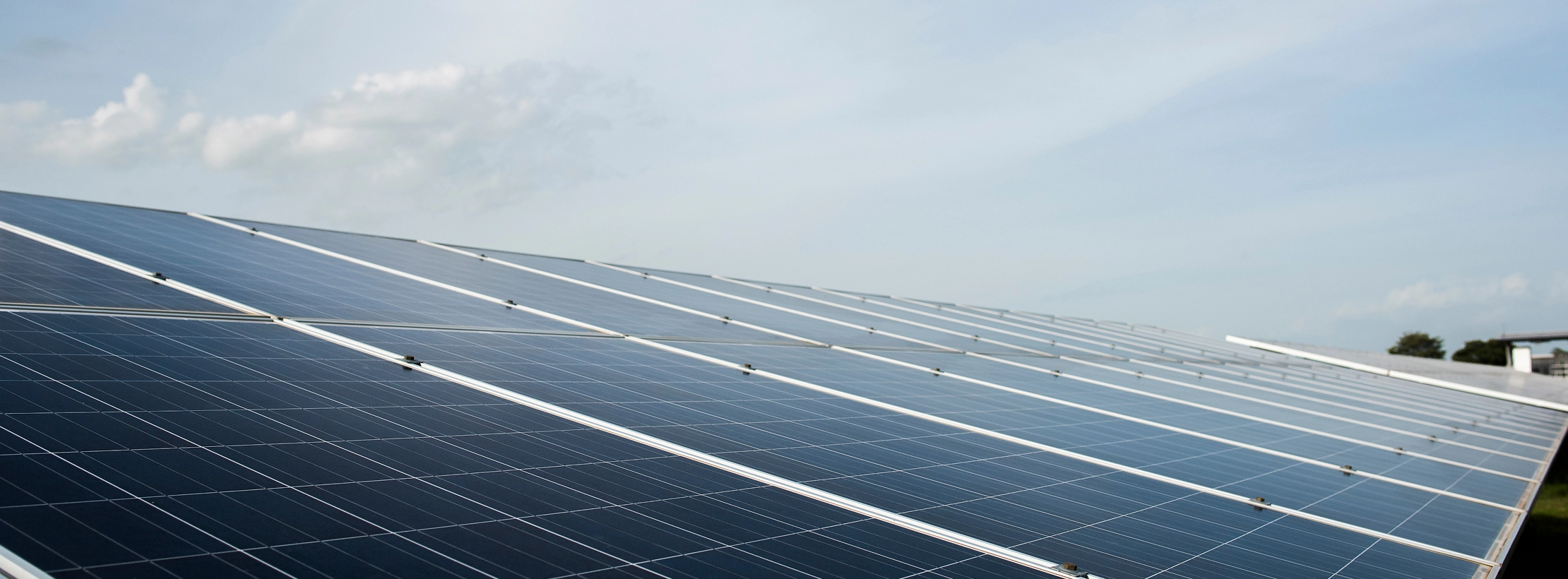
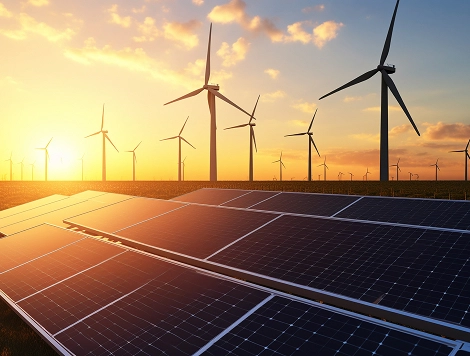
- Promote the adoption of renewable energy by installing solar rooftop systems at the head office and pilot branches.
- Cultivate tangible and practical energy-saving awareness among all employees.
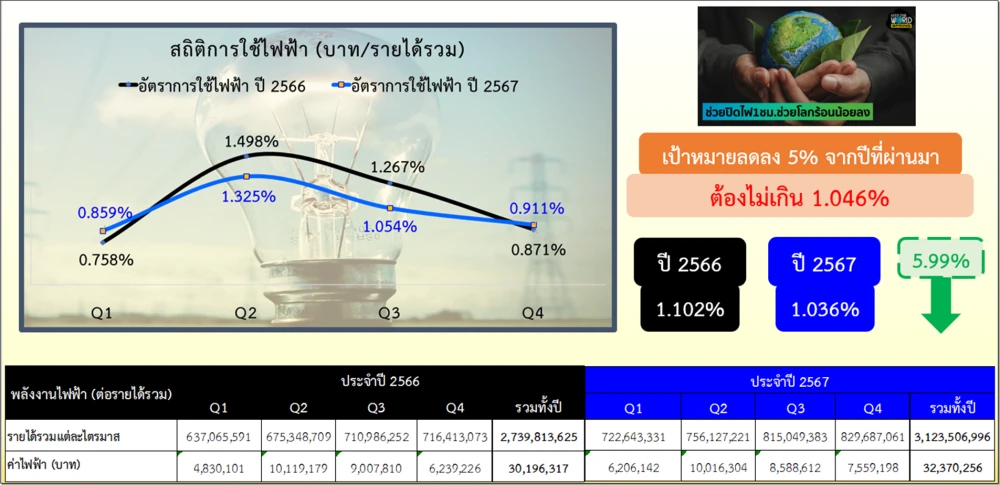
The Company has established energy targets to systematically collect data and control our Electricity Consumption Intensity, ensuring it does not increase compared to the base year. We aim to reduce office electricity consumption by at least 5% and continuously expand the solar rooftop installation project across our pilot branches.

Operations and Implementation
- Establish office electricity management measures: We align the operating hours of air conditioners and advertising signs with standard business hours, gradually replace existing equipment with LED bulbs, and strictly opt for No. 5 energy-saving labels when purchasing new air conditioners.
- Vehicle Management: We install GPS tracking systems and utilize Fleet Cards to meticulously monitor and plan the field routes of our credit officers, thereby minimizing fuel consumption and optimizing travel efficiency.
- Promote Alternative Energy: We support carpool initiatives for employees' long-distance travel and are currently piloting the integration of electric vehicles (EVs) into the Company's operational fleet.
- Internal Campaigns: We conduct ongoing energy-saving campaign projects at the head office and across all branches to foster a strong, sustainable energy conservation culture within the organization.
Performance and Results
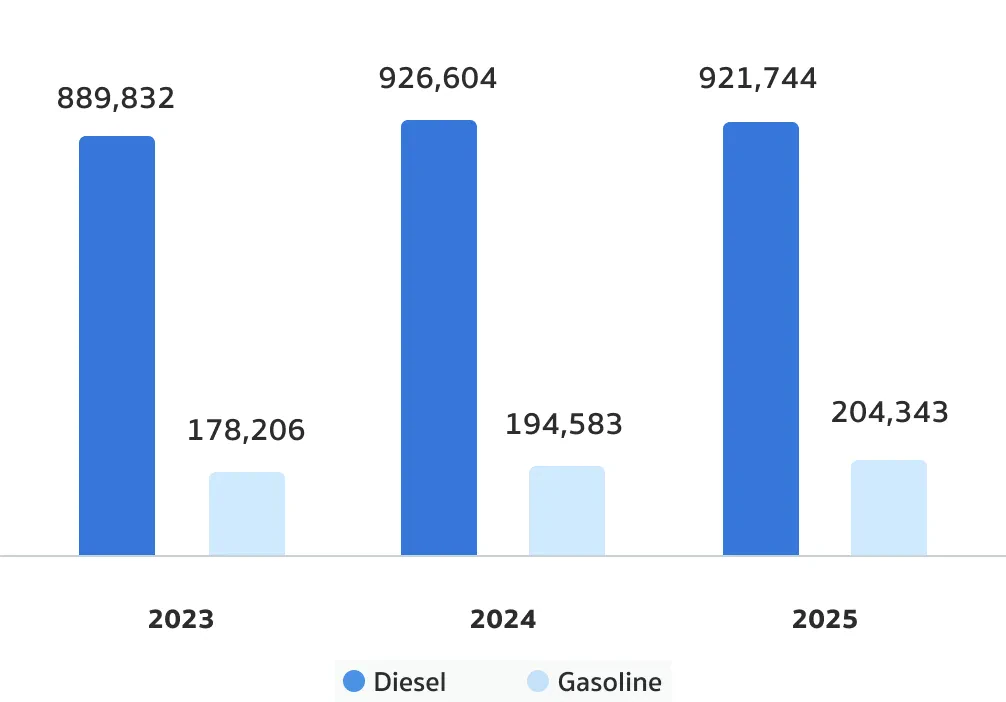
The Company has established a robust environmental database to continuously monitor our performance. In 2025, despite achieving a total revenue growth of 3,341 million Baht, our energy management remained highly efficient, as detailed below:
1) Fuel Consumption
| Category | Total 2023 | Total 2024 | Total 2025 | 2025 Target vs Total Revenue | 2025 vs 2024 (%) | 2026 Target vs Total Revenue |
|---|---|---|---|---|---|---|
| Automobile Fuel (Diesel) | 889,832 Liters | 926,604 Liters | 921,744 Liters | 5% reduction from the previous year | -7.07% | 5% reduction from the previous year |
| Fuel Intensity to Total Revenue | 0.0325% | 0.0297% | 0.0276% | |||
| Motorcycle Fuel (Gasoline) | 178,206 Liters | 194,583 Liters | 204,343 Liters | 5% reduction from the previous year | -1.61% | 5% reduction from the previous year |
| Fuel Intensity to Total Revenue | 0.0065% | 0.0062% | 0.0061% |
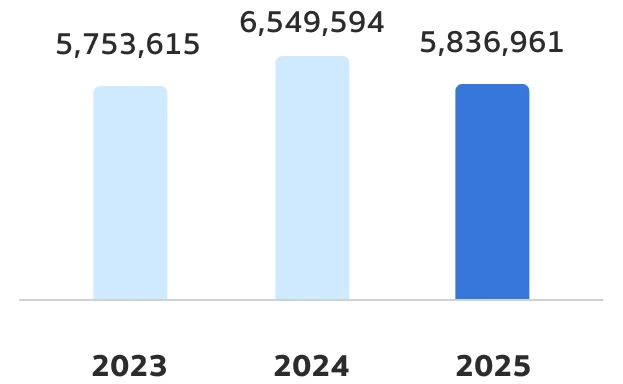
2) Electricity Consumption

| Category | Total 2023 | Total 2024 | Total 2025 | 2025 Target vs Total Revenue | 2025 vs 2024 (%) | 2026 Target vs Total Revenue |
|---|---|---|---|---|---|---|
| Electricity Consumption | 5,753,615 kWh | 6,549,594 kWh | 5,836,961 kWh | - | - | - |
| Electricity Intensity to Total Revenue | 0.2100% | 0.2097% | 0.1747% | 5% reduction from the previous year | -16.69% | 5% reduction from the previous year |
3) Implemented comprehensive energy-saving campaign projects, which successfully improved energy efficiency, resulting in a 16.69% decrease in the ratio of electricity consumption to total revenue.
4) Installed an additional 180 kW solar rooftop system at the head office building, capable of generating 138,619 kWh of solar electricity.
5) Expanded the solar rooftop installations to 18 pilot branches during Q4/2026 and commenced systematic collection of usage data.
Stakeholders Directly Impacted

Employees

Customers